The emerald ash borer, an invasive beetle that has killed hundreds of millions of ash trees across North America, has likely reached Jackson Bottom Wetlands Preserve in Hillsboro.
The Oregon Department of Forestry reported Thursday, Aug. 6, that a suspected detection at the 635-acre preserve is awaiting official state confirmation. If confirmed, it would mark the beetle's arrival inside Hillsboro city limits, threatening the Oregon ash canopy that shades the preserve's Riparian Trail to Vic's Grove.
The city's own wildlife-habitat page for Jackson Bottom warns that the invasive emerald ash borer "could wipe out Oregon's ash trees." The preserve supports nearly 300 plant species.
Spreading fast across Washington County
ODF also confirmed new infestations inside Beaverton, at Bethany Lake Park in the Rock Creek area and along the Banks-Vernonia State Trail, according to the Hillsboro News Times. The Banks-Vernonia finding marks the first time the beetle has been detected in an Oregon state park. All were discovered when traps set this spring were checked in July.
"The pattern of spread in the eastern U.S. has been that populations at first increase slowly and the rate of natural spread is slow," said Cody Holthouse, manager of the Oregon Department of Agriculture's Insect Pest Prevention and Management Program. "But within a few years there is a rapid build-up in the population and it spreads in all directions at a faster pace. That's exactly what we're starting to see with these detections."
The beetle was first found in Oregon in 2022 at Forest Grove's Joseph Gale Elementary School. Washington County has been under a quarantine, later made permanent, prohibiting the movement of ash, olive and white fringe trees. Five Willamette Valley counties are now covered: Washington, Clackamas, Marion, Multnomah and Yamhill.
What Hillsboro homeowners should know
Once infested, ash trees typically die within two to four years. The beetle kills more than 99% of untreated ash trees, according to The Oregonian.
ODF and the Oregon Department of Agriculture recommend homeowners:
- Stop planting ash and olive trees.
- Treat high-value ash trees in good condition with preventive insecticide injection, administered by a licensed applicator every two to three years. Treatment must begin before infestation damage occurs.
- Remove ash trees planted in poor locations, such as under power lines, and replace them with non-susceptible species.
- Never move firewood or wood chips out of the county. Human movement is a key driver of spread.
ODF specialist Matt Mills said the insecticide injection is taken up into the tree canopy and effectively protects against both adult beetles and larvae. Beaverton, Portland and Salem are already using the same treatment on high-value public ash trees.
Nearby Beaverton has treated 22 city-maintained natural area trees and planted over 2,000 native trees and shrubs in 2026, said Beaverton City Arborist Jered Lane. The city used grant funding from the Tualatin Soil and Water Conservation District to treat 600 of its roughly 2,000 inventoried ash street trees in 2025.
How to report a sighting
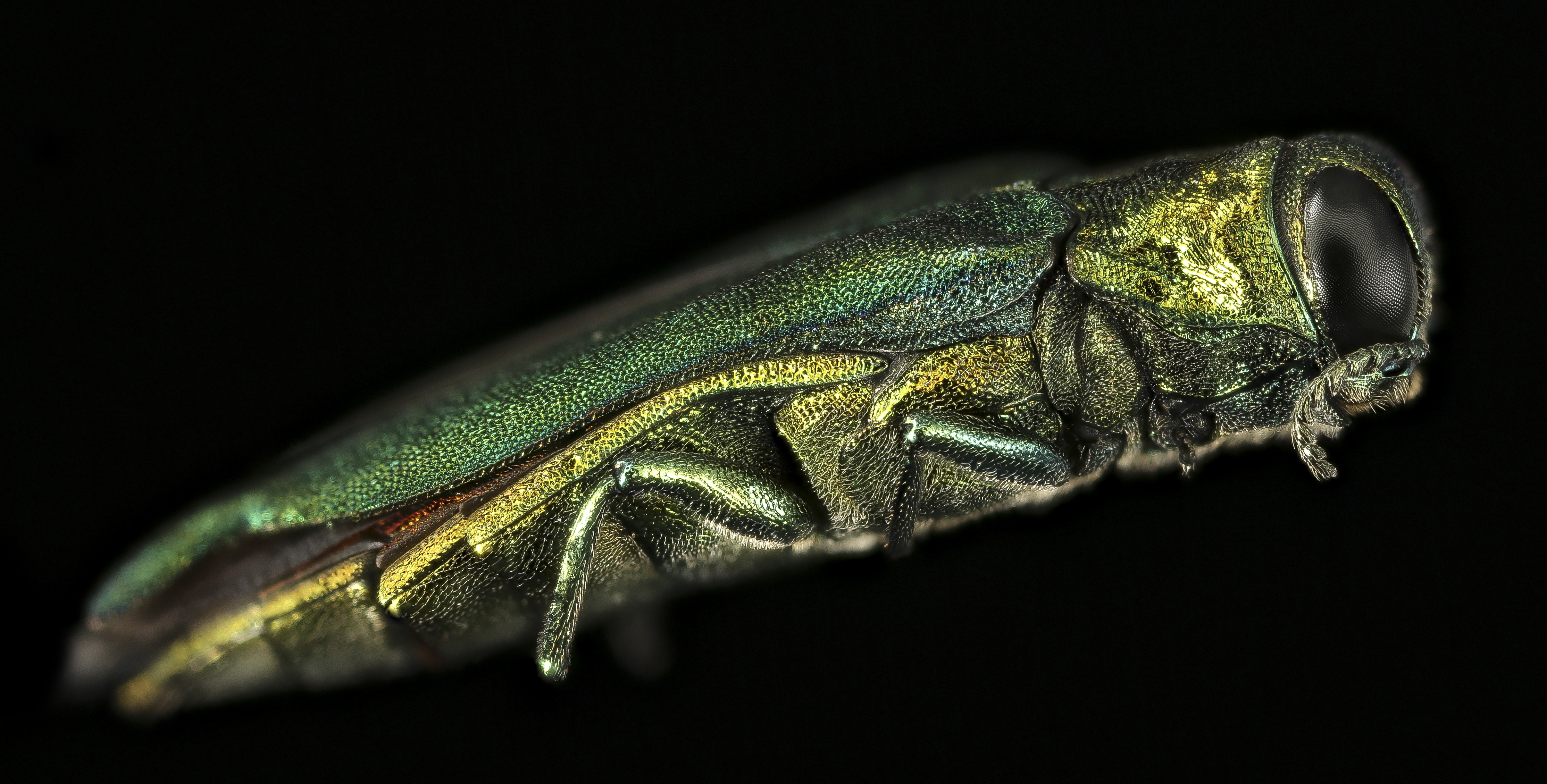
EAB adults are active June through September. The metallic green beetle is about half an inch long with a reddish abdomen and large black eyes. Signs of infestation include thinning and yellowing leaves, bark splitting, D-shaped exit holes about 3 millimeters wide and new shoots sprouting from the trunk.
ODF specialist Kat Bethea advised residents to compare any suspected beetle against common green look-alikes at OregonEAB.com before reporting. Capture the beetle in a jar if possible, or take a clear, close-up photo.
Report sightings online at oregoninvasiveshotline.org or by calling 1-866-INVADER (866-468-2337).