Every person who completed Washington County's drug deflection program over its first two years entered treatment and stayed engaged.
That 100% treatment-engagement rate is one of several outcomes the county highlighted as the Deflection Program marked its two-year anniversary on Tuesday, Sept. 1. The program, launched under Oregon House Bill 4002 after the state re-criminalized misdemeanor drug possession, gives people cited or arrested in Hillsboro and across Washington County a path to treatment instead of prosecution.
As of mid-August, 166 people had participated. Of those, 55 completed the six-month program and 36 remained enrolled. Approximately two-thirds of participants who entered the program without housing became housed while enrolled, and roughly 90% of uninsured participants gained insurance coverage, according to the county.
The numbers represent a sharp jump from year one. At the program's first anniversary in August 2025, 86 people had participated and 23 had completed it. Referrals to partner organizations climbed from nearly 300 in year one to more than 960 over two years, with the share that led to services rising from 60% to 76%.
About one-third of participants had never received substance use treatment before entering the program. Another third had previously experienced an overdose.
"What makes our program special is that we ensure people connect to the services they need and receive frequent peer support," Danielle Farr, the program's senior coordinator with Washington County Behavioral Health, said in the county's announcement. Farr added that the program is personalized to address the underlying causes of substance use for each participant.
Two contracted peer-services organizations, 4D Recovery and The Peer Company, handle outreach and connect participants to more than 30 partner agencies for housing, mental health treatment and substance use services.
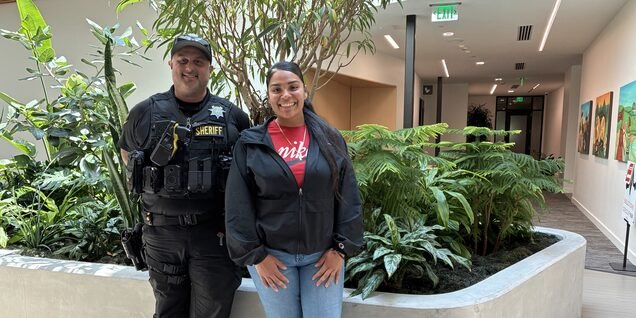
In July, the county expanded the program by launching a non-citation track. The new pathway reaches people who have not been formally cited but are at risk of criminal justice involvement, such as bystanders present when someone else receives a citation. Deflection Deputy Nick Shreiber of the Washington County Sheriff's Office and Deflection Outreach Peer Yunuhen Salazar work together on that effort. The county had already broadened citation-track eligibility twice during the program's first year.
Every completer stayed in treatment.
All outcome data comes from Washington County's own reporting. No independent audit or state-level verification of the figures has been published.
Residents can find more information about the program at the county's deflection page.