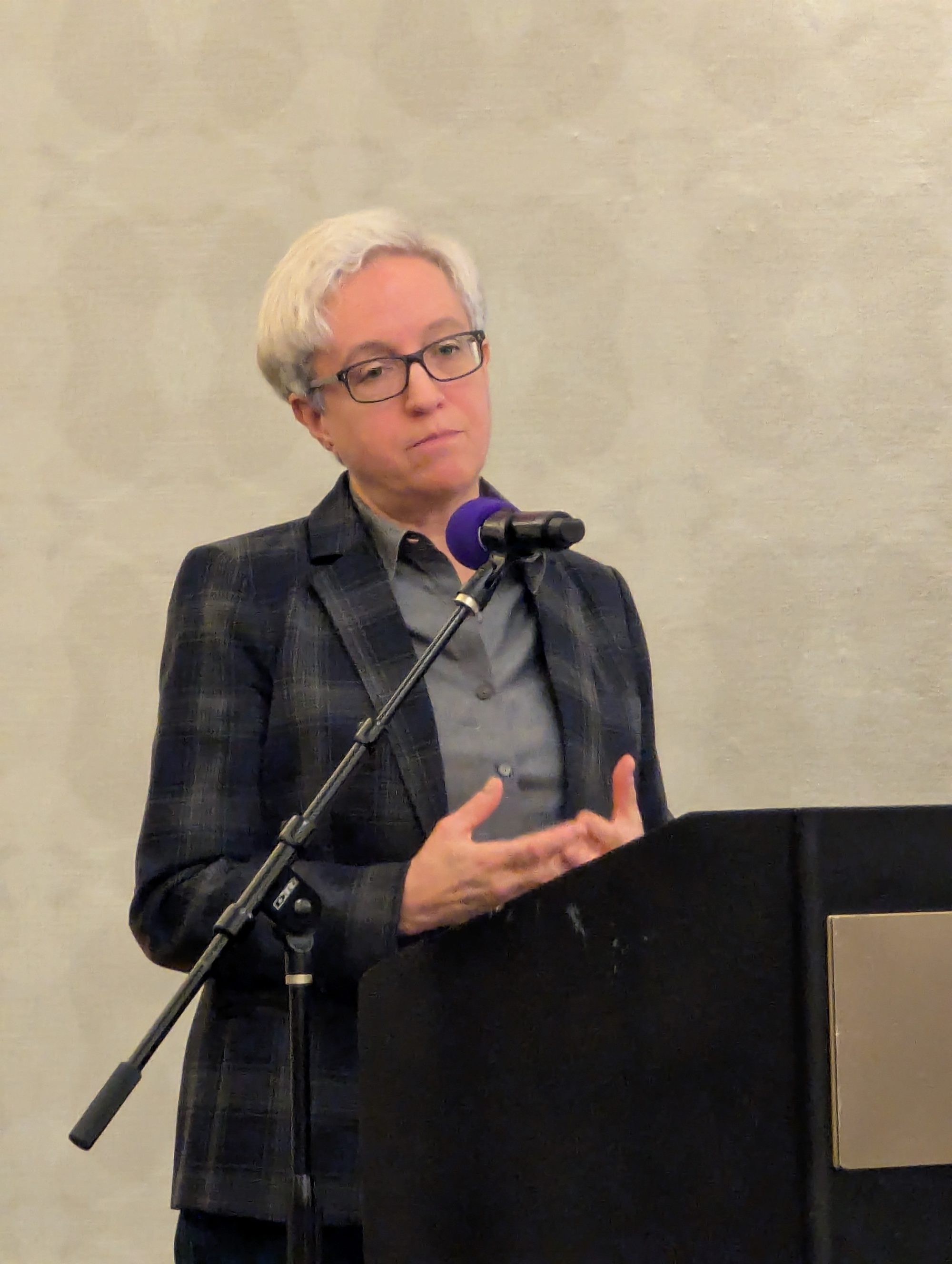
Oregon Gov. Tina Kotek signed an executive order Thursday, Sept. 24, directing the state to develop safety review standards for advanced AI before agencies can deploy it.
The order targets state procurement, but it could ripple through Hillsboro's Silicon Forest, where Intel employs 16,000 workers in Washington County and companies like Lam Research are investing billions in AI-era chip development. Any vendor selling advanced AI tools to the state would face new scrutiny once the rules take shape.
Executive Order 26-26 directs State Chief Information Officer Terrence Woods to create standards for independent, third-party safety reviews of AI technology the state buys or uses. Woods has 90 days to submit an implementation proposal to the governor, The Oregonian/OregonLive first reported.
The order also requires Woods to define which AI systems qualify as "frontier" models, a category the state has yet to formally define. He must evaluate whether a "kill switch" could let the state shut down AI systems deemed unsafe. Technology experts have said building such a mechanism would be extremely difficult.
"… We cannot simply wait for the private sector to self-regulate a technology that poses such an existential and evolving risk," Kotek said in a statement accompanying the order.
Hope Hiebert, communications director at Oregon Enterprise Information Services, told Government Technology the proposal will address standards for independent safety review but that the state does not yet have a timeline for adopting any resulting rules.
No tech company operating in the Silicon Forest has publicly responded to the order. Intel, Oregon's largest corporate employer, develops AI chip technology at its 500-acre Hillsboro campus and its D1X research facility, according to KLCC. No specific state procurement contracts with Intel were identified in public records.
Oregon's electronics industry accounts for more than $14 billion in exports annually, according to The Oregonian/OregonLive. Lam Research broke ground Aug. 26 on a 120,000-square-foot lab in Tualatin as part of a $3 billion global investment to accelerate AI semiconductor research. That facility is expected to open in 2028.
Kotek cited federal inaction as the reason for the order. President Donald Trump has resisted calls to regulate advanced AI. California Gov. Gavin Newsom issued a similar executive order the week before Kotek's Sept. 24 action, and Illinois Gov. JB Pritzker created an AI cabinet the same week.
Oregon had already established an Artificial Intelligence Advisory Council, which delivered its recommended action plan to Kotek in February 2025. The new order builds on existing state policies for responsible AI use by adding procurement-specific safeguards for frontier models.
The order took effect immediately. Kotek will reassess whether it remains necessary every three months. Woods' implementation proposal is due by late December.