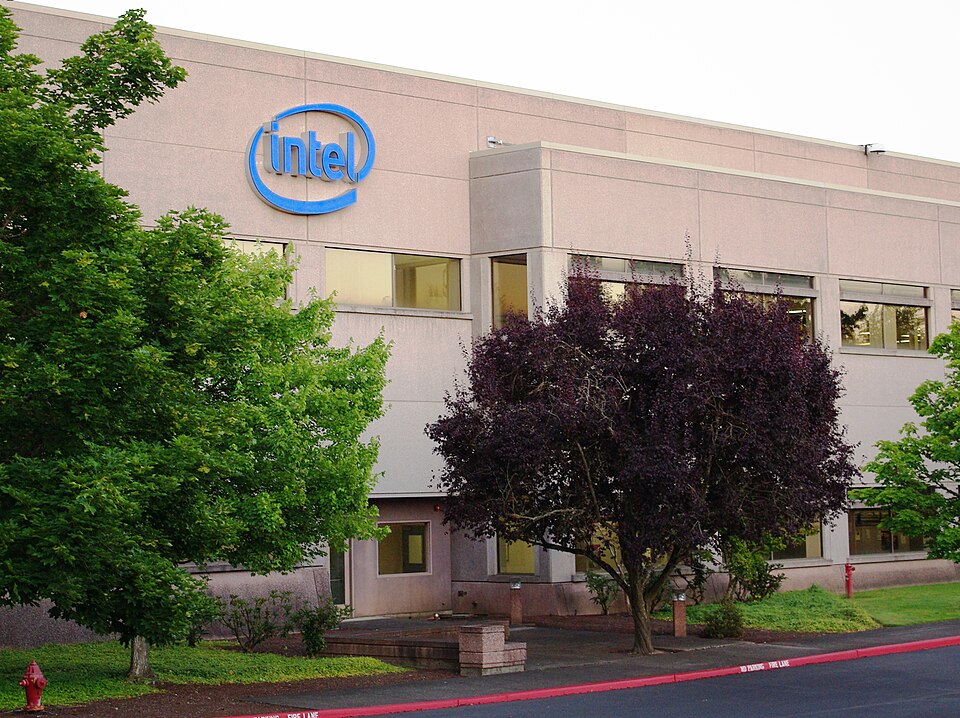
Intel launched a new workforce pipeline program on Thursday, Aug. 6, that directs funding to Oregon schools and colleges to train the next generation of chip workers for its Hillsboro fabs.
The Semiconductor Education Pathways Program, or SEPP, covers K-12 career and technical education, community college transfer pathways, faculty training, undergraduate research and graduate scholarships across four states where Intel manufactures chips: Oregon, Arizona, New Mexico and Ohio.
Intel did not disclose how much money SEPP will invest or name specific Oregon partner schools. The company described the effort in its newsroom announcement as an internally funded program aimed at building a semiconductor talent pipeline in regions supporting its U.S. manufacturing operations.
Why it matters here
Hillsboro sits at the center of Intel's U.S. manufacturing operations. The timing is pointed.
Oregon's semiconductor workforce has fallen to a 30-year low, according to The Oregonian. Intel itself has shed roughly 7,000 Oregon jobs since 2024, dropping from about 23,000 employees to approximately 16,000 at its Washington County campuses.
A June 2026 strategic assessment commissioned by Business Oregon warned that without action on workforce development, the state risks losing relevance in the global chip industry. State Sen. Janeen Sollman, co-chair of Oregon's Joint Committee on Semiconductors, told KOIN 6 News on July 9 that the Legislature needs to treat that report "as a roadmap, not another report to put on the shelf."
What students and educators get
SEPP's Oregon activities, as described by Intel, include:
- Undergraduate research focused on semiconductors and microelectronics
- Community college transfer and technician pathway programs
- Faculty training in semiconductor manufacturing, AI and quantum computing
- Student design challenges, capstone projects and boot camps
- Educator externships and industry immersion experiences
- Career-connected learning for K-12 students
The program is separate from Oregon's FAST coalition, a nearly 100-partner group led by Oregon State University that secured up to $160 million in National Science Foundation funding in July 2026. That coalition already includes Portland Community College, which is building stackable semiconductor credentials with Portland State University. Whether those same institutions will also receive SEPP funding is unclear.
Broader context
Rob Stone, FAST's interim CEO and an Oregon State University professor, said during a July 23 OPB interview that Hillsboro is one of only three places in the world capable of taking an advanced logic chip from clean-slate design all the way to full-scale manufacturing in the same location, alongside Taiwan and South Korea.
That distinction helps explain why Intel chose Oregon as one of SEPP's four target states, even as the company's global headcount has fallen nearly 40% since 2022.
Intel has not announced application deadlines for SEPP scholarships, externships or K-12 programs. The company directed readers to its Corporate Responsibility Report for additional details on education programming.