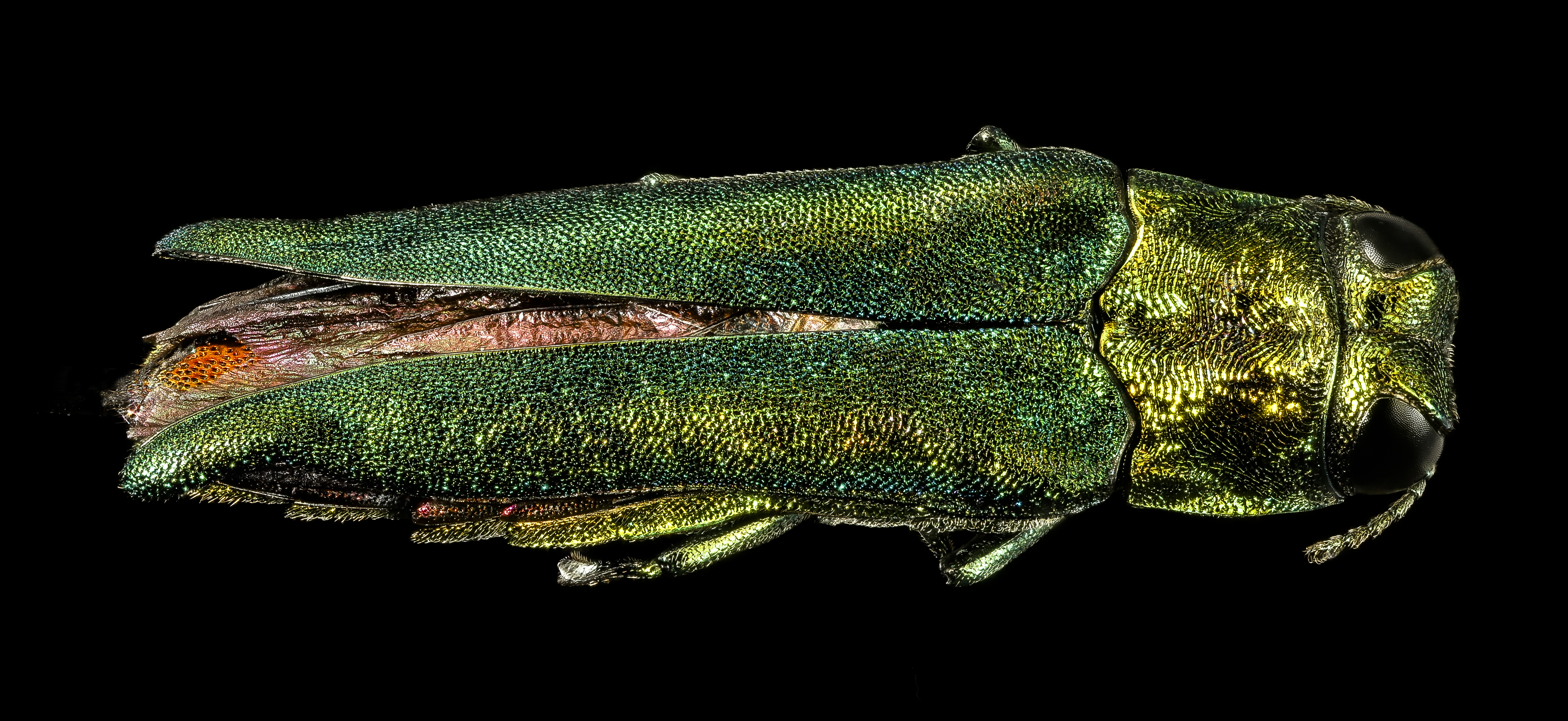
Hillsboro is treating about 500 public ash trees each year as the emerald ash borer continues spreading across the Pacific Northwest.
The invasive beetle, already confirmed at Jackson Bottom Wetlands Preserve and several other Hillsboro locations, reached Washington state for the first time this fall. An arborist in Walla Walla County found the pest's telltale D-shaped exit holes in a backyard green ash tree, OPB reported Saturday. The U.S. Department of Agriculture (USDA) confirmed the species Oct. 14, according to the Washington State Department of Agriculture (WSDA).
Oregon ash is the Pacific Northwest's only native ash species. It lines streams and wetlands across Washington County, providing shade, habitat and food for birds and insects. Forestry officials expect Oregon could lose up to 99% of its ash trees to the beetle over time, OPB reported.
Already in Hillsboro
The beetle was first detected on the West Coast in Forest Grove on June 30, 2022, according to the Oregon Department of Agriculture (ODA). It has since been confirmed in Beaverton, Portland, Salem, Silverton and other cities across five Oregon counties.
In late July, emerald ash borer was confirmed at Jackson Bottom Wetlands Preserve, with multiple Oregon ash trees showing canopy decline, according to a city announcement. The city's emerald ash borer page lists several confirmed locations in southwest and southeast Hillsboro.
Natural Resources Manager Laura Trunk told the Parks and Recreation Commission in June that the city's park system contains about 300 acres of ash canopy. The city's management plan includes a systemwide risk assessment of high-risk ash trees across parks, natural areas and trail corridors, according to commission minutes.
"While confirming the emerald ash borer at Jackson Bottom is important, it does not change the work we have already been doing to prepare for its arrival," Trunk said in the city announcement.
The city has completed a comprehensive inventory of public and right-of-way trees and is treating about 500 healthy public ash trees annually, according to its emerald ash borer page.
What homeowners can do
The city and state agencies offer clear guidance for residents with ash trees:
- Water ash trees during dry months and maintain mulch around the base. Summer drought stresses trees and makes them more vulnerable.
- Avoid pruning from April through October, when the beetle is most active.
- Stop planting new ash trees. Both WSDA and Oregon's forestry department recommend removing ash from approved planting lists.
- Consider treatment. Healthy ash trees over six inches in diameter can be treated with an emamectin benzoate trunk injection. The treatment lasts about two years and costs around $400 for a large tree, OPB reported. A licensed pesticide applicator must perform the injection.
- Don't move firewood. Buy firewood locally, within 10 miles if possible. Oregon has a permanent quarantine restricting the movement of ash tree materials out of Washington, Yamhill, Marion, Clackamas and Multnomah counties.
Residents who spot the beetle or signs of infestation can report sightings to the Oregon Invasive Species Online Hotline at oregoninvasiveshotline.org or by calling 866-INVADER. Sightings on city property can be reported to Hillsboro Urban Forester Lisa Renee Wilson at [email protected].
Signs of infestation include thinning canopy, bark splits and tiny D-shaped exit holes about three millimeters wide.