Hillsboro could shrink the land available for new data centers by more than 90%, under an ordinance the City Council advanced Tuesday, Oct. 6.
The proposed rules would cap data center acreage at 608 acres across three industrial zones, down from roughly 6,600 acres currently zoned for the facilities.
As we reported Oct. 7, the council took up the city's first permanent data center code at its Tuesday meeting. The outcome: councilors advanced the ordinance but stripped out a provision on affiliated-property data centers along the way.
The council voted 5-1 to remove language that would have let businesses place accessory data centers on a separate, affiliated property in an industrial zone. Councilor Cristian Salgado cast the lone dissenting vote, according to the Hillsboro News Times.
Councilor Kipperlyn Sinclair pushed for the removal. She argued the provision could open additional areas to data centers and create pockets of environmental impacts, such as heat, before the city fully understands those effects.
What the caps look like
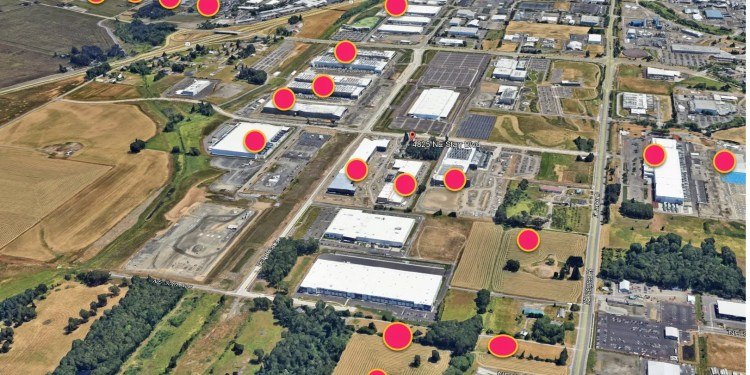
Under the proposed ordinance, standalone data centers would be limited mainly to Hillsboro's Industrial Park and Industrial Sanctuary zones, with cumulative caps of 215 acres and 310 acres. Another 83 acres would remain available in portions of the Jackson East area.
Most of that space is already spoken for. About 203 acres in the Industrial Park zone and 293 acres in the Industrial Sanctuary zone have already been approved for data center development, the News Times reported Sept. 23. That leaves room for about 12 more acres in the Industrial Park zone and 17 in the Industrial Sanctuary zone.
Council President Rob Harris told The Oregonian that without action, data centers could consume "thousands of acres" of future development land. "I think this is really a step forward in a lot of ways," Harris said in the Oct. 8 report.
Tax breaks and jobs
The stakes extend beyond land use. Data centers in Hillsboro received $84 million in local property tax breaks last year, according to Washington County records cited by The Oregonian. Those facilities employed 284 people, amounting to about $296,000 in tax breaks per job per year.
Hillsboro resident Britt Holloway urged the council at the Oct. 6 meeting to take a harder line. "We should stop negotiating from a position of weakness and start recognizing the value that Hillsboro brings to the table," Holloway said, according to The Oregonian.
School buffer set for 12-month trial
The Hillsboro Planning Commission recommended a 1,000-foot buffer between data centers and public or private schools serving children under 18 in September, citing heat concerns. The distance would be measured property line to property line.
The council agreed to keep the buffer but made it temporary. If adopted, the restriction would last 12 months while the city studies the issue further.
Accessory data centers that remain on a business's own property would face size limits: no more than a quarter of a site's gross acreage or 30% of the primary business's floor area, whichever is smaller. Those facilities could not lease computing services to outside customers.
What comes next
A second phase of data center code changes is expected over the winter and spring, covering building heights, additional buffers and green-building requirements. Hillsboro's temporary moratorium on new data center proposals remains in effect until Nov. 24.
The Oct. 20 council meeting will include the second reading and potential final vote on the ordinance. If adopted, the rules would take effect 30 days after passage and approval by the mayor.