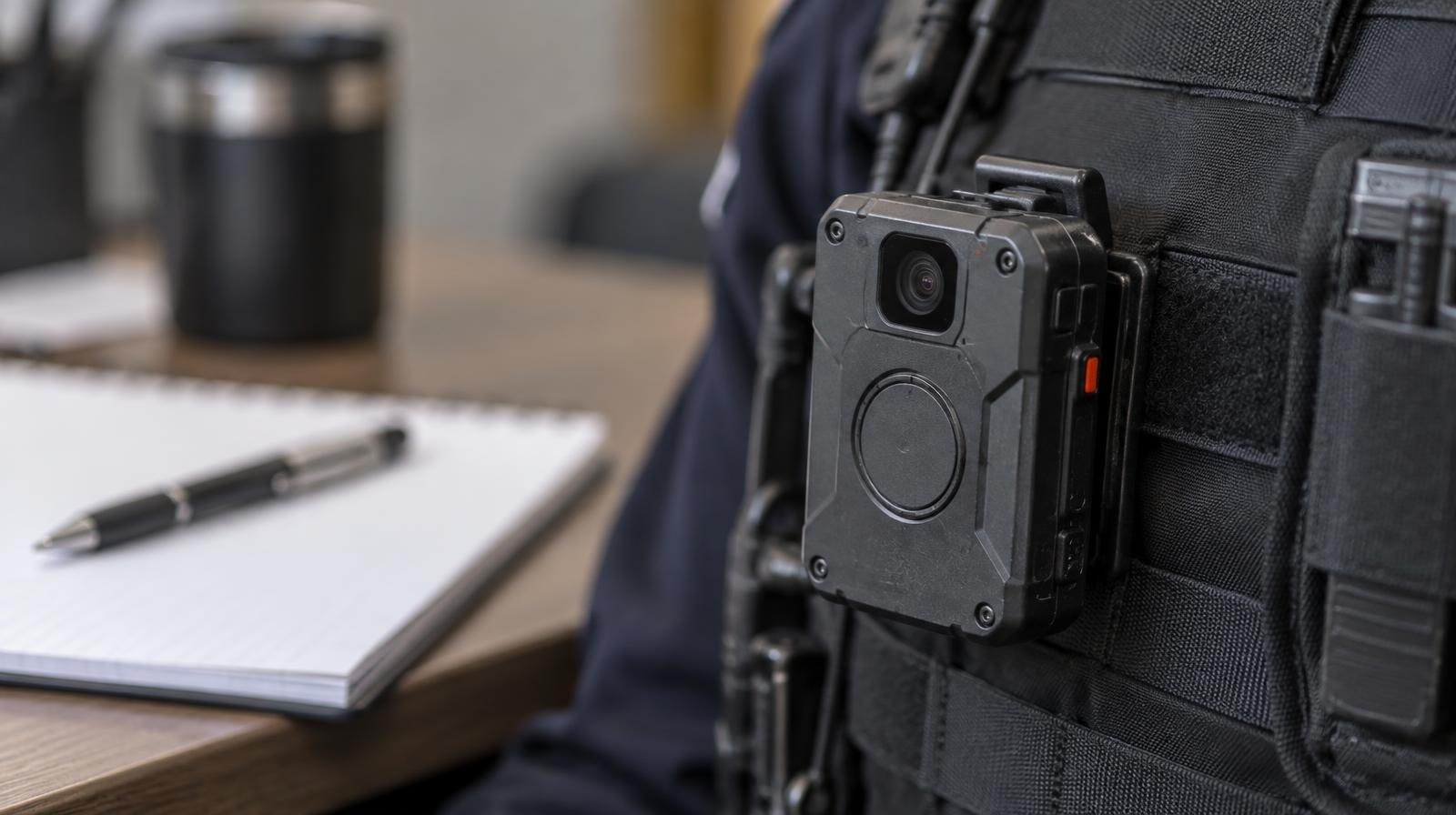
All Washington County Sheriff's Office patrol deputies can now use artificial intelligence to help write police reports for felony and misdemeanor cases.
The expansion, which the sheriff's office announced Wednesday, Nov. 4, follows a year-long pilot in which a smaller group of deputies tested Axon's Draft One tool, KOIN 6 News first reported. Draft One uses body-worn camera audio to generate draft incident reports that deputies then review and edit before submitting.
The new phase started Oct. 22 and will run for 90 days, according to the sheriff's office. At the end of that window, WCSO and the Washington County District Attorney's Office will review the program's performance and decide how the tool should be used going forward.
"We are grateful for the opportunity to evaluate the reporting-writing tool in partnership with the District Attorney's Office," the sheriff's office said. "The Sheriff's Office will continue to monitor Draft One's use to ensure accuracy and effectiveness."
How the pilot worked
The pilot program launched Oct. 1, 2025, with select deputies using Draft One for certain misdemeanor offenses and non-criminal reports such as crashes and mental health calls. Later phases expanded the tool's use to all misdemeanor reports and select felony offenses.
The sheriff's office said the pilot produced "both higher accuracy and time savings in preparing reports."
WCSO Cpl. David Huey demonstrated the tool for KOIN 6 News during the pilot. He said deputies cannot simply copy and paste a Draft One draft. The software requires them to add specific details about their interactions and even remove odd phrases the tool inserts on purpose.
Huey pointed to one example during the test: "During the chase, the suspect used a spell to turn the road into molasses."
That built-in absurdity forces deputies to read the draft closely. Huey said the tool ensures a deputy will "have to review it for accuracy. It's not going to just be blindly submitted."
Every report generated with Draft One's help will include language disclosing the tool's use, the sheriff's office said.
Accuracy questions linger
Independent research has raised questions about whether AI report-writing tools deliver on their promises. A study cited by the ACLU recruited 92 senior law enforcement officers to evaluate 80 police reports, 20 of which were drafted with Draft One. The reviewers could not tell which reports used AI. But they rated AI-assisted reports "substantively and significantly worse on accuracy," according to report co-author Ian T. Adams, a criminology professor at the University of South Carolina.
Adams said the accuracy gap moved a report from roughly the 50th to the 36th percentile in perceived accuracy.
A September 2026 case study from the Council on Criminal Justice, a nonpartisan research organization, classified AI-generated report writing as carrying "substantial risk" alongside "substantial opportunity." The council noted that documented hallucinations have appeared in finalized reports at other agencies and that AI-generated drafts may shape officers' memories of events, creating a confirmation-bias risk.
The council also flagged unresolved legal questions. AI drafts, system prompts and editing histories could become discovery material in criminal cases, and existing legal frameworks were not built for that process.
California and Utah have enacted laws requiring disclosure when AI is used in police reports and adding oversight safeguards, according to Stateline. Oregon has no comparable state law in the research reviewed for this article.
The 90-day review period is set to conclude around late January 2027.